



What is systemic lupus erythematosus (SLE)?

It is a type of “autoimmune disease.“
When functioning normally, the body’s immune system kills germs and some cells that could turn into cancer.
When a person has an autoimmune disease, instead of killing only those specific cells, the immune system starts attacking healthy cells in various organs (such as the skin, joints, blood, kidneys, heart, lungs, etc.). This is called an “autoimmune response” and causes symptoms.
What are the symptoms of lupus?
Lupus can affect any part of the body. People with lupus may experience:
- Rashes on the face and body, especially after exposure to the sun
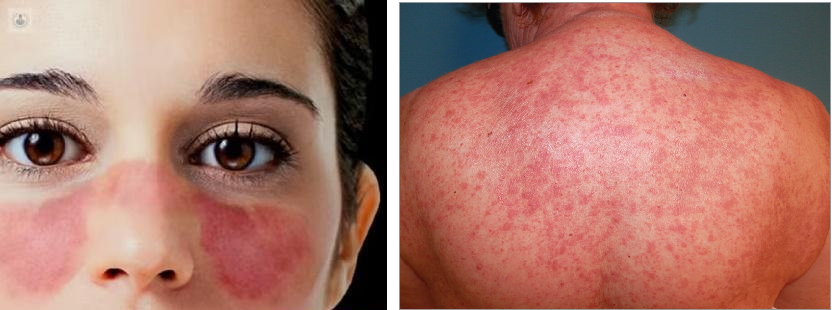
- Hair loss
- Sores in the mouth or nose
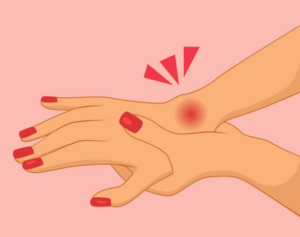
- Joint pain and stiffness
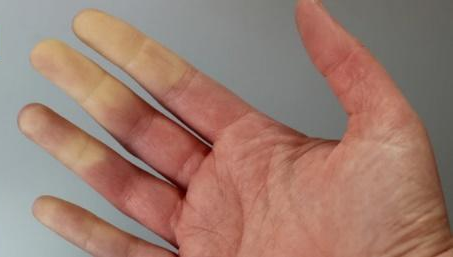
- Fingers or toes turning pale or blue with cold or stress (Raynaud’s phenomenon)
- Fever (or chills), fatigue, weight loss, lasting several days
- Chest pain
- Difficulty breathing
- Urine that appears foamy or brown (tea-colored)
- Easy bruising
- Repeated miscarriages or blood clots (antiphospholipid syndrome)
- Lupus can also make it difficult to think clearly and can cause people to feel anxious and sad.
This may be because the disease is chronic and does not always mean that lupus needs more treatment.

Who gets lupus? Are some people at greater risk of developing it?
Lupus affects approximately 3-5 people per 10,000 inhabitants in our country.
It is 9 times more common in women than in men and usually occurs in women aged 14-40.
Although lupus is more common when there is a family history, only 3 in 100 children of parents with lupus develop symptoms of lupus.
How is it diagnosed?
The diagnosis will be made by a rheumatologist by gathering and evaluating data from the patient’s history, clinical examination, simple blood tests, and some special tests such as ANA, ENA, C3, C4 complement, and antiphospholipid antibodies.
Most people with lupus are positive for ANA. However, there are some cases (estimated to be <10% of people with lupus) who are negative for these antibodies.
I am ANA positive, so do I have lupus?
Not necessarily.
It is WRONG to say that anyone who is ANA positive has lupus or that anyone who is ANA negative cannot have it.
The diagnosis of lupus is clinical, meaning it is made by a specialist rheumatologist only after careful evaluation of the symptoms, clinical examination (arthritis, rashes, etc.) and laboratory tests.
Therefore, the diagnosis cannot be based on a laboratory test alone.
What can I do on my own?
● Eat a healthy diet with plenty of fruits and vegetables.
● Exercise, even if you feel tired. If you remain inactive, your muscles will weaken and your joints will become stiffer over time.

● Avoid direct exposure to the sun whenever possible. To protect your skin, it is essential to use sunscreen that blocks UV-A and UV-B radiation.
●Stop smoking. Smoking can worsen lupus.
How is lupus treated?
There are medications that can relieve the symptoms of lupus and reduce the autoimmune response. These medications include:
● Hydroxychloroquine
This medication was originally developed to treat malaria, but it is very helpful for patients with lupus and is essential for them to take.
● Steroids (cortisone) at the lowest possible dose for the shortest possible time
They partially “deactivate” the immune system. They can help with many of the problems caused by lupus and act fairly quickly.
However, they can also cause their own problems. For example, steroids can cause weight gain, weaken bones, or worsen diabetes.
● Immunosuppressive drugs such as methotrexate, azathioprine, cyclosporine, mycophenolic acid, and cyclophosphamide.
● Biological agents approved for SLE, such as Belimumab and Anifrolumab.
It is important for patients with lupus to be monitored regularly by a rheumatologist and to undergo tests.
What if I want to get pregnant?
People with lupus are more likely than others to have problems with pregnancy, but they can have healthy babies.
If a patient with lupus wishes to become pregnant, she needs to talk to her rheumatologist before trying, as:
– The patient’s treatment may need to be changed to be compatible with pregnancy
– The lupus needs to be in remission for at least 6 months before conception
– It is important to undergo certain tests to reduce the chances of complications.